
Product Knowledge
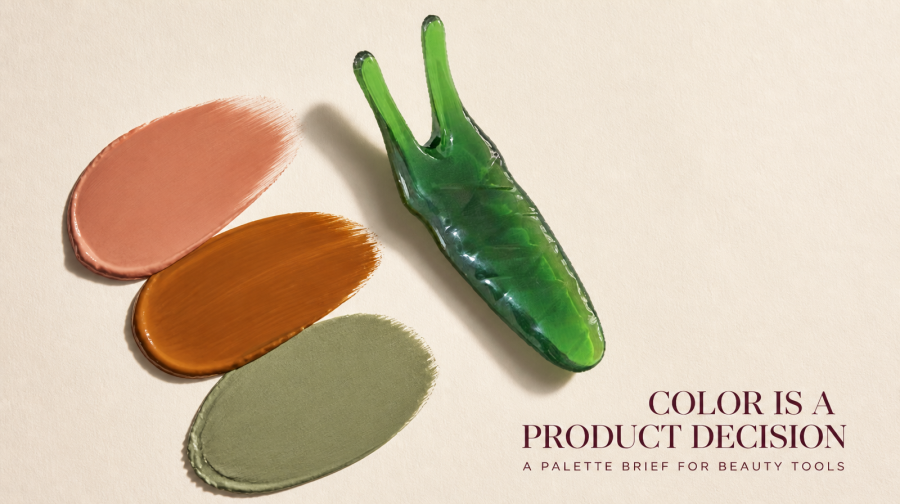
Color Is a Product Decision: Building a Beauty-Tool Palette
Color is not the last decoration decision in a beauty-tool project. It is a purchasing variable that shapes the SKU hierarchy, the packaging, the way a range is displayed and the way a sample is approved. Treating it early keeps later changes cheaper.
Start with a color job to be done
Before a shade is chosen, decide what the color has to do in the range:
- Launch color - the shade that carries a new tool into the range and sets the visual tone for the collection.
- Core reorder color - a stable shade kept available so repeat buyers can match what they already stocked.
- Seasonal test color - a limited shade used to test a direction before it is committed more widely.
These are planning roles, not performance promises; whether a color sells is decided by the market.
Turn references into a usable brief
A color reference only becomes useful when it is described in a way a supplier can act on. Use a two-column brief.
| Color input | What the supplier needs |
|---|---|
| Physical swatch | A mailed sample or approved chip that can be matched by eye |
| Digital reference | A code or file, clearly labelled as a starting point only |
| Acceptable tolerance | How close the match must be, in words your team agrees on |
| Surface finish | Whether the shade is matte, gloss, translucent or speckled |
| Photo-lighting note | The light condition used for reference photos, so comparisons are fair |
Approve the palette in the right order
Approve in sequence, and keep the physical item in the loop at every step:
- Reference - agree the target shade in writing.
- Sample chip - check the chip against the reference in daylight.
- Product sample - confirm the shade on the actual tool and finish.
- Packaging check - confirm the tool still reads correctly against the pack.
A screen color never replaces a physical confirmation; monitors and files vary, so the chip and the product sample are the deciding evidence.
When color becomes a custom project
Some colors can be met with standard planning, others become a custom program. As Miss Beauty Group planning guidance, stock and standard work typically starts from 500 pcs, while custom color or mold work is usually planned from 3,000+ pcs. These are guidance figures rather than a guarantee, and the final minimum is confirmed per project.
A short decision record
Keep these five records together:
- Color code or reference used.
- Surface finish agreed.
- Approved sample identity.
- Packaging match note.
- Sign-off date.
Plan the palette with us
See how existing shades sit on real tools such as the Y-shaped resin facial tool and the Y-shaped resin facial massage tool, then send your color direction through our contact page.
0users like this.
