
OEM / ODM
How to Build an OEM Resin Massage Tool Brief for Wholesale Buyers
Why a clear brief matters
A concise product brief helps a brand and supplier discuss the same product. It reduces avoidable revisions, clarifies which decisions are fixed and separates a standard wholesale item from a custom development project.
For resin massage tools, the brief should cover more than a product name. Shape, color, surface finish, presentation, image direction and order plan all influence how the final item will be evaluated by a buyer or retail partner.
1. Define the product role
Start with one clear sentence describing where the tool belongs in the collection. Examples include a facial massage accessory, a compact self-care tool, a spa retail accessory, a gift-set component or another clearly defined resin massage tool example.
This helps determine the shape language, color direction, packaging style and the type of photography needed for launch.
2. Set the product form
Describe the desired silhouette with visual references and a simple written explanation. State whether the product should be compact, rounded, slim, flat, curved or multi-contact. If a source shape already exists, identify which parts must remain unchanged and which parts may be developed.
Avoid adding technical details that have not been approved. The physical sample should remain the authority for final form and finish.
3. Establish the color direction
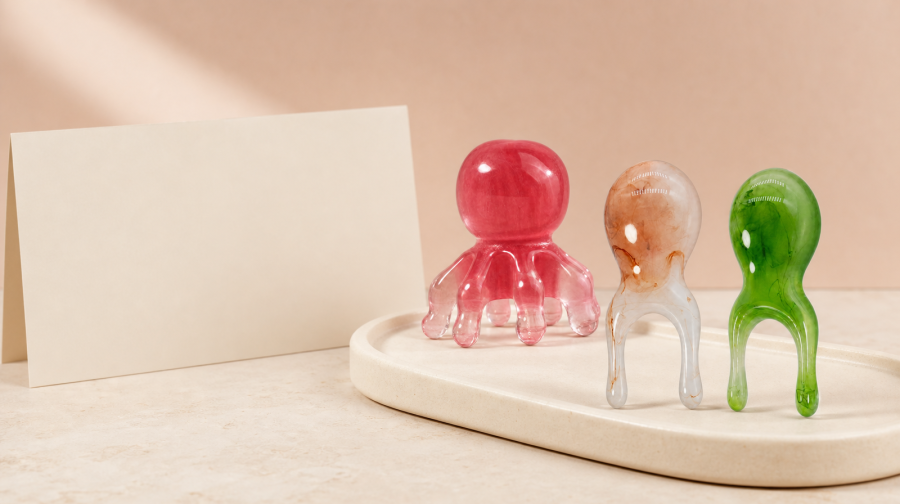
Choose a specific color family rather than saying only “colorful” or “premium.” Useful directions may include translucent pink, amber, soft green, neutral ivory, or a coordinated two-color set such as amber and green resin facial tools.
For custom color programs, define the approved sample, acceptable variation and whether the same color needs to appear across related accessories or packaging.
4. Clarify surface and finish expectations
A resin product can be presented with a clear, translucent, marbled, polished or softly colored appearance. The brief should explain the intended visual result without promising a finish that has not been tested.
Sample review should focus on:
- Smooth edges and contact surfaces
- Clean polishing
- Color distribution
- Visible surface marks
- Transparency or internal pattern consistency
- Product balance and handling feel
5. Plan the packaging direction
If packaging is part of the project, state the preferred format: pouch, tray, folding carton, rigid box, gift set or another approved option. If packaging is not yet decided, leave it open for quotation rather than presenting an invented format as standard.
Packaging images used in marketing should accurately represent the agreed presentation. A product display tray should not be described as a confirmed retail box.
6. Prepare sample approval points
Before mass production, align on the sample version, color, finish, visible details and presentation. Keep the approved sample and the final written notes together so the buying and production teams are working from one reference.
A strong approval record can include:
- Product form and dimensions
- Color direction
- Surface finish
- Logo or engraving requirement, if applicable
- Packaging direction
- Product image standard
7. Separate standard wholesale from custom development
A standard wholesale program and a custom OEM program should be quoted separately.
For standard or stock products, use MOQ 500 pcs as the planning baseline. For custom molds, custom colors or other custom development, use MOQ 3,000+ pcs.
This distinction helps brands compare a ready-to-order program with the investment and lead-time requirements of a custom project.
8. Build the image and content plan
A B2B product launch should normally include four product images:
- White-background hero image
- Product detail image
- Usage or lifestyle scene
- Packaging or packaging-reference image
In the product Description, place the TO B hero poster first, then move directly into Product Highlights. Follow with product information, customization options, order information and an inquiry CTA. Do not repeat a Wholesale & Private Label block when that message is already communicated visually.
9. Prepare the buyer-facing SEO
The product title should lead with the category and product form. The meta description should explain the B2B use case, customization direction and MOQ without copying supplier-listing language.
Use tags that help buyers find the product, such as facial massage tool, resin skincare tool, OEM beauty accessory, private label tool and wholesale skincare.
10. Confirm the launch plan
Before publication, confirm the product name, SKU, category, image order, Description structure, SEO fields, standard or custom MOQ and inquiry contact. A short checklist is more useful than a long product description filled with unverified claims.
Final takeaway
A good OEM resin massage tool brief turns a visual idea into a workable wholesale project. Define the product role, form, color, finish, packaging direction and order plan before requesting a quotation. This gives both sides a clearer path from sample approval to production.
Ready to Stock This Massage Tool?
Contact our team to confirm specifications, packaging, logo artwork and project requirements.
Request Wholesale PriceAsk About Customization0users like this.
